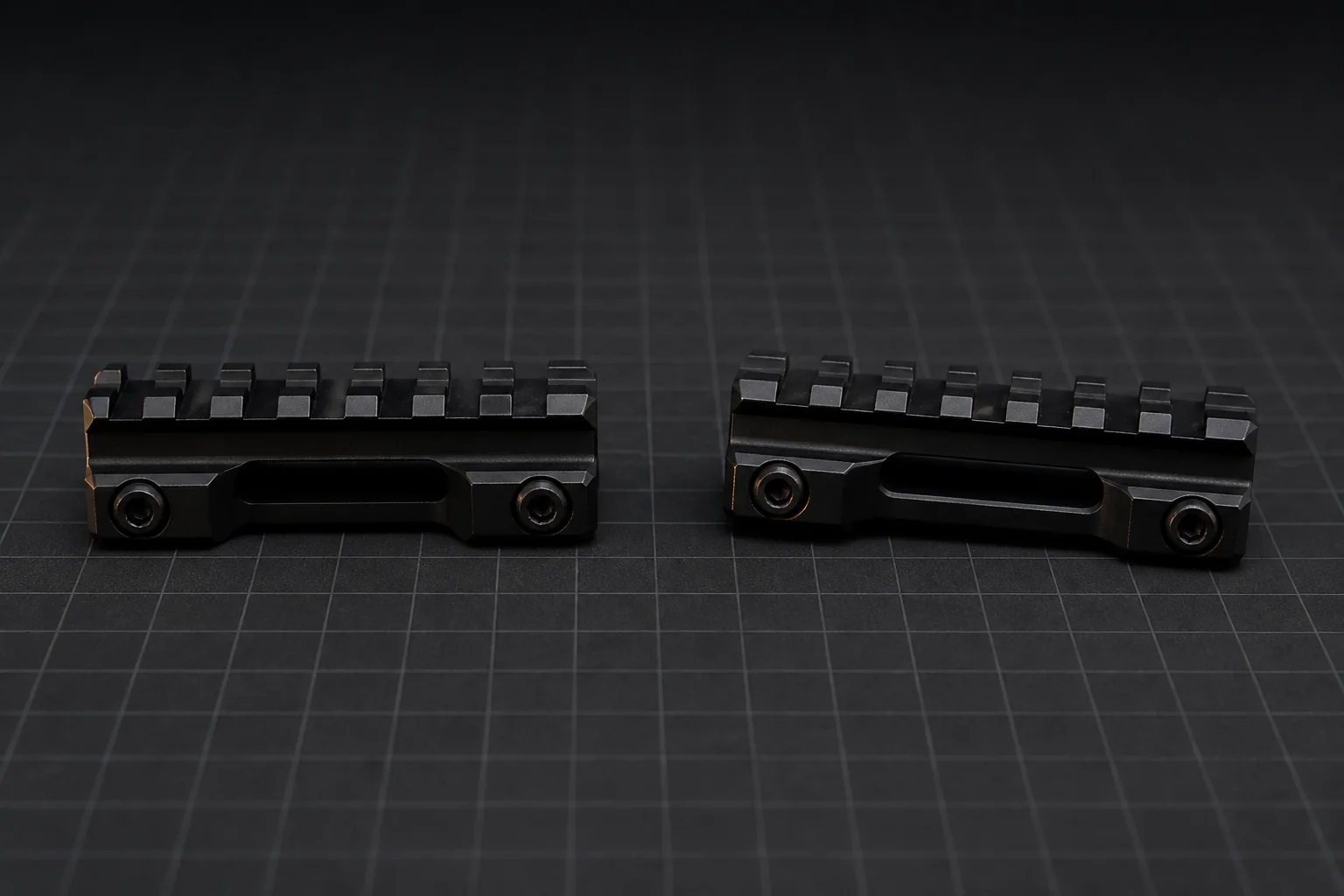
0 MOA vs 20 MOA Scope Base: A B2B Sourcing Decision Guide
For distributors and importers building a precision optic accessories catalog, the scope base is the quiet foundation under every stable zero. The single most common specification question from B2B buyers is simple: 0 MOA or 20 MOA? Getting this choice wrong means returns, rework, and lost repeat orders. This guide gives procurement teams a clear framework to match base inclination to the optics you source and the markets you serve.
What a Scope Base Actually Does
A scope base is the interface between the receiver and the rings. It fixes the optic’s starting elevation reference before any ring torque is applied. In the Mounts & Rings category, the base is as decisive as the rings themselves for repeatable zero programs. Our scope ring selection guide covers the ring side; this article covers the base side.
0 MOA vs 20 MOA, Explained
MOA means minute of angle, a small angular unit used to describe elevation. A 0 MOA base sits flat. A 20 MOA base tilts the optic down at the front by a fixed amount, giving the scope additional elevation travel for distant targets.
- 0 MOA base — flat reference, ideal for short- and mid-range setups where the optic’s internal adjustment is enough.
- 20 MOA base — pre-tilted, ideal for long-range precision optic builds that need extra elevation without maxing out the reticle adjustment.
When to Specify a 20 MOA Base
Choose a 20 MOA base when the end use is long-range precision and the optic has limited internal elevation. It lets the shooter keep the reticle centered while still reaching far distances. Pair it with the right rail standard and confirm the optic’s adjustment range with the supplier before committing to a production run.
When 0 MOA Stays the Safer Default
For most distributor catalogs, 0 MOA is the volume SKU. It fits the widest range of optics and end uses, simplifies inventory, and avoids the over-travel problems that appear when a 20 MOA base meets a short-range optic. A flat base also makes initial zero validation faster on the bench.
Material and Torque Discipline
Base material trades weight against rigidity. Aircraft aluminum and steel each have a place; our carbon fiber vs aircraft aluminum comparison maps the trade-offs for B2B sourcing. Torque discipline matters more than the alloy:
- Torque the base screws to the receiver spec, then torque the rings to the optic spec.
- Use a square-edged torque tool and keep surfaces clean before seating.
- Specify matte or anodized finishes to cut glare in field use.
A Practical B2B Sourcing Checklist
- Confirm the end-use range profile of your top-selling optics before picking 0 or 20 MOA.
- Standardize on Picatinny plus M-LOK where the market demands; keep dovetail adapters for heritage channels. Our rail compatibility guide maps each standard.
- Request repeatable-zero data and finished surfaces from the supplier.
- Negotiate private-label and MOQ terms up front to protect margin on repeat orders.
- Validate the full setup with our mount and rail compatibility selector before a production run.
Decision Table: 0 MOA vs 20 MOA Base
| Criteria | 0 MOA | 20 MOA |
|---|---|---|
| Starting reference | Flat | Pre-tilted |
| Best range | Short to mid | Long distance |
| Inventory fit | High-volume default | Niche or specialist |
| Zero validation | Fast on bench | Needs range check |
| Catalog role | Core SKU | Add-on SKU |
Common Pitfalls to Avoid
- Mixing base inclination with ring height — solve base tilt first, then ring height.
- Over-tilting for short-range optics — a 20 MOA base on a close-range setup can run out of down-travel.
- Skipping torque order — base screws before rings, every time.
Where Bases Fit in the Four-Category System
Bases belong in Mounts & Rings, but they only perform as part of a system. Match them with the right optics, seat them on the correct rail, and complete the build with stabilization such as bipods and resting systems. Our optical mounting glossary defines every term used above.
Frequently Asked Questions
Q: Which base should a new catalog start with?
A: Start with 0 MOA in 30 mm and 34 mm footprints to cover the highest-volume optics, then add 20 MOA as a specialist add-on.
Q: Can a 20 MOA base hurt a short-range optic?
A: It can limit down-travel at close distances. Confirm the optic’s adjustment range with the supplier before specifying 20 MOA.
Q: How do I brief a supplier for private label?
A: Share footprint, preferred material, finish, and target MOQ. Our OEM/ODM capabilities guide outlines the full brief.
Specify Your 2026 Base Line
Ready to build a base program for your catalog? Message our team on WhatsApp at wa.me/8618300076352, or open an RFQ at our contact page. We support distributors and importers with private-label mounting systems, repeatable-zero data, and flexible MOQ.